Safety culture is a term most commercial UAS pilots associate with large organizations — airlines, military units, corporate flight departments with dedicated safety officers and formal SMS programs. It sounds like something that doesn’t apply to the solo Part 107 operator flying inspection contracts in three states.
That’s a misconception that has ended more than a few commercial UAS careers.
Safety culture isn’t a program. It’s a set of habits, standards, and values that shape every operational decision you make — from how you conduct a pre-flight inspection to whether you fly in marginal conditions because the schedule says you should. And it matters for solo operators and small teams as much as it does for anyone else.
What Safety Culture Actually Means
A genuine safety culture has three characteristics:
Reported. When something goes wrong — or almost goes wrong — it gets documented and discussed, not buried. In an organization, this means a non-punitive reporting system. As a solo operator, it means writing up your own close calls honestly and using them to improve your procedures.
Learned. Information from incidents — yours and others’ — feeds back into how you operate. The UAS industry generates incident data through ASRS reports, FAA enforcement records, and pilot communities. Operators who read and learn from that data don’t repeat the same mistakes.
Consistent. Standards are applied every time, not just when conditions make it easy. A pre-flight checklist completed on every flight — including the short, familiar one you’ve done 50 times before — is a safety culture behavior. Skipping it because “you know this site” is not.
The Hidden Cost of Low Safety Standards
Beyond the obvious risk of incidents, low safety standards carry a business cost that isn’t always visible until it matters. Enterprise clients — utilities, carriers, construction companies, insurance firms — increasingly evaluate UAS vendors on safety credentials before awarding contracts. They ask for operations manuals, safety records, incident history, and evidence of structured operational procedures.
A pilot who can demonstrate consistent, documented safe operations commands better rates and more stable enterprise contracts than one who can’t. Safety culture is a competitive advantage, not just a moral obligation.
Practical Safety Culture Habits for Solo Operators
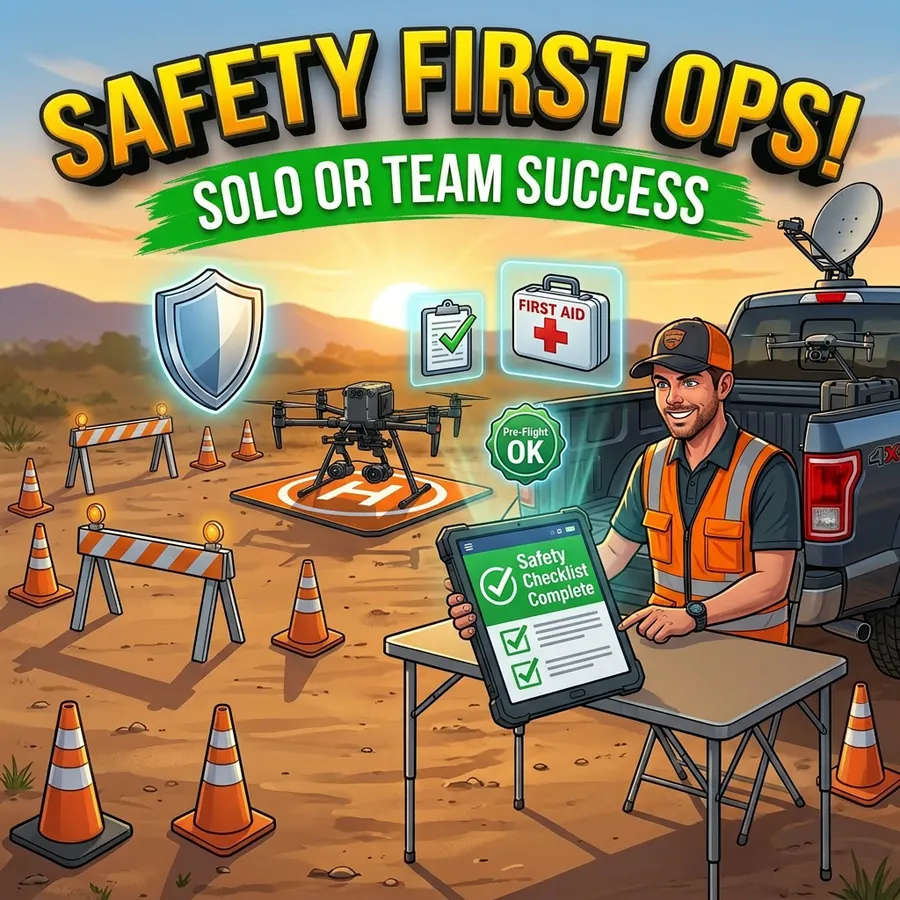
Pre-flight, every time. No exceptions. No abbreviated versions for familiar sites. The checklist exists because familiar sites are where complacency lives.
Personal weather minimums, written down. Limits you’ve committed to in advance are the ones you’ll actually hold to when conditions are marginal and pressure to fly is high.
An honest post-flight debrief. Even a two-minute mental review — what went as planned, what didn’t, what would you change — builds the pattern recognition that makes you a safer operator over time. Write it down when something is worth noting.
Equipment that’s ready to fly before it needs to fly. Battery health checked regularly. Props inspected after every flight. Firmware current. Maintenance intervals tracked. You find equipment issues during maintenance, not during a mission.
Currency. If you haven’t flown in a while, practice before taking a client job. Motor skills and pattern recognition erode. Solo proficiency flights aren’t wasted time — they’re maintenance on your most important piece of equipment, which is you.
How FlightDeck Supports a Safety Culture
Safety culture requires documentation — the evidence that standards are being applied consistently. FlightDeck’s structured logging captures pre-flight completion, conditions, authorization status, anomalies, and post-flight notes in a local database attached to every mission record.
The Drone Maintenance Log tracks maintenance events, battery cycles, and repair history by aircraft serial number — exportable for insurance documentation and compliance records. The Airspace Checker ensures every site gets a proper authorization review before you fly, not after. The compliance documentation tools build the operational paper trail that enterprise clients and insurers require.
Safety culture produces the data. FlightDeck captures it.
Download the free 30-day trial and start building the operational record that proves your safety standards to clients, insurers, and the FAA — one documented flight at a time.