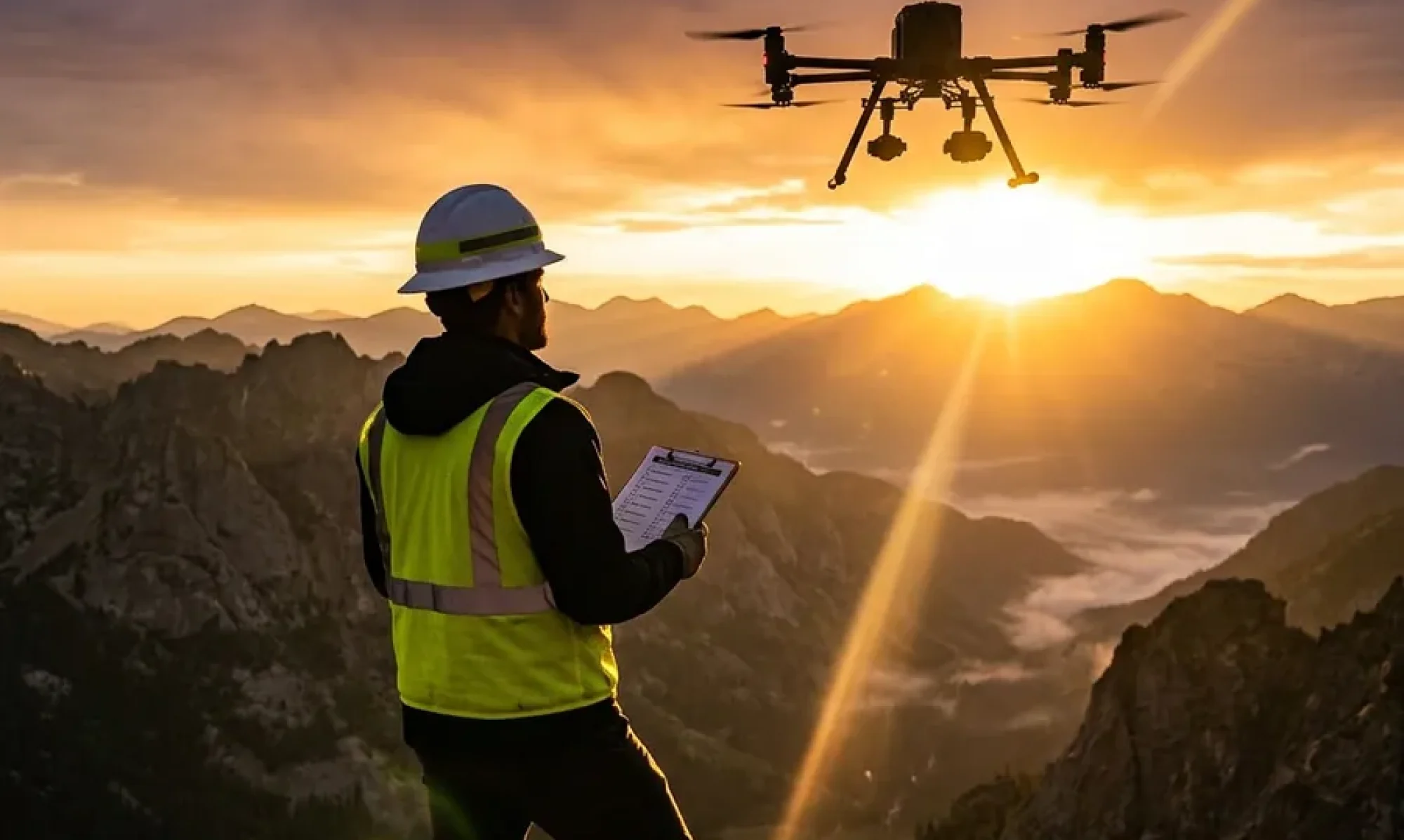

A significant portion of commercial UAS work happens in rural America — pipeline corridors through West Texas, agricultural parcels in the Midwest, transmission line inspections in Appalachia, construction monitoring on exurban development sites. These are some of the highest-value jobs available to commercial operators. They’re also where you learn fast that the tools built for urban drone work don’t always travel well.
Here’s what the rural commercial operations reality actually looks like.
Connectivity Is a Luxury
Urban pilots take LTE coverage for granted. Rural operations routinely involve driving 40 minutes from the nearest town to a site with zero cell signal. Whatever you need from the internet — maps, NOTAMs, client files, your operations software — needs to already be on your device before you leave the truck.
This means downloading airspace data in advance, having offline maps ready, and running software that doesn’t require a connection to function. A pre-departure connectivity checklist is as important as your preflight inspection.
The Logistics Are Real Work
Rural jobs often involve:
- Multi-day mobilizations with overnight stays
- Coordinating with landowners, site managers, and sometimes local law enforcement
- Managing fuel, accommodations, and equipment transport
- Flying in changing weather conditions with no easy abort option
- Dealing with terrain that looks very different on a map than it does from the ground
This isn’t a two-hour shoot with a 20-minute drive. Rural commercial operations are logistical projects. Managing them well is a professional skill.
Weather Windows Are Everything
In an urban environment, a delayed shoot is an inconvenience. On a rural site two states away, a scrubbed day costs you a full mobilization. Reading weather accurately — not just the forecast, but the actual conditions at altitude — is a critical competency for rural operators.
Build buffer time into every rural job estimate. Clients who’ve worked with professional operators understand weather windows. Clients who haven’t will learn.
The Equipment Redundancy Requirement
On a rural job, equipment failure means the mission fails and you absorb the cost of remobilization. Redundancy isn’t optional at this level: backup aircraft, spare batteries, redundant props, a basic repair kit, and spare memory cards at minimum.
Documentation Still Matters — Maybe More
Rural and remote operations often involve more complex airspace considerations, more landowner coordination, and more logistical complexity than urban work. Clients who hire for rural ops tend to be larger, more sophisticated, and more likely to ask for detailed documentation.
Your operational records from rural jobs are among the most valuable you’ll produce. Log every flight, every coordination, every weather check.
FlightDeck was built for exactly this kind of operation — running without connectivity, logging what matters, and keeping your data intact whether you’re in downtown Dallas or a gravel road in the Panhandle.